Vedic Threads | Recorded
The yoga of the Pashupatis, one of the oldest yogic lineages.
This session explores the ancient Pāśupata yogic lineage, highlighting it as a foundational root of Haṭha Yoga. It traces its evolution through archaeology, temple traditions, and its influence on practices like Shadow Yoga. Central to the teaching is nṛtta (sacred movement) and karaṇas, used not for performance but for inner transformation—dissolving primal tendencies and cultivating meditative states through prāṇa and mantra. The reflection session emphasizes the importance of context, rasa, and holistic learning, encouraging a shift from purely analytical understanding to embodied, experiential wisdom. Together, the sessions invite deeper integration of movement, awareness, and contextual learning into daily life.

Guest Instructor
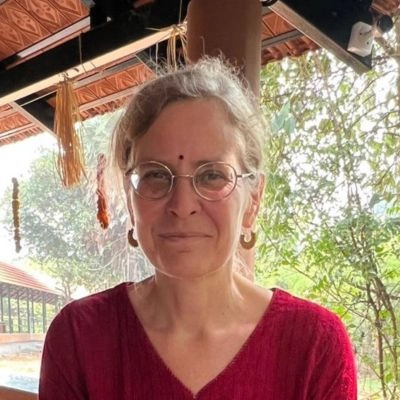
Emma Balnaves
Emma Balnaves is a senior yoga teacher, co-founder of Shadow Yoga, and an initiate of Sundernath, known for her deep, embodied approach to yogic practice. Introduced to yoga in her early teens, she later transitioned from a creative career in photography and visual arts across Sydney, New York, and London to fully dedicate herself to teaching. With decades of study in yoga, Ayurveda, and internal arts, her work integrates movement, breath, and consciousness. Her film Agniyogana reflects her commitment to sharing the deeper essence of yoga beyond technique, offering a holistic understanding of the practice.
The yoga of the Pashupatis, one of the oldest yogic lineages with Emma Balnaves
Topics Covered:
- Origins of the Pāśupata Tradition: The Pāśupata lineage is considered one of the oldest Śaiva sects, mentioned in the Pāśupata Sūtras of Kaṇṭinya, and was likely a foundational root of Haṭha Yoga.
- Archaeological Evidence: The famous Pāśupati seal from Mohenjo-Daro, depicting a seated yogi in bhagāsana, hints at early meditative practices aimed at transforming primal energies.
- Cultural Spread: Pāśupata influence reached regions like Nepal, Gujarat, and Southeast Asia, leaving behind temples and carvings, though the tradition itself became largely extinct after the 12th century.
- Dance as Yoga: Pure dance (nṛtta) was central to Pāśupata practice, as recorded in the Nāṭya Śāstra. It was used for inner transformation rather than outward performance.
- Karaṇas in Practice: Around 32–36 karaṇas were used for yogic cultivation. Each form evokes specific energetic effects and supports meditative stability.
Link to Nātha Tradition: Gorakṣanātha, a major figure in Haṭha Yoga, is seen by some as a continuation of the Pāśupata tradition, emphasizing the unity of these lineages. - Importance of the Feet: Energy rises from the feet in karaṇas. Power is cultivated through leg strength and balance, initiating flow without force.
- Trance-like States: The narrow, spiraling movements of karaṇas lead to a meditative trance, facilitating entry into inner stillness and silence.
- Adaptability and Ahimsa: The practice is meant to be adaptable. Modifications for age, joint sensitivity, or injury are fully supported, as long as the energy and intention of the form is preserved.
- Mantra and Internalization: Mantra, especially internal (manasa) repetition, is essential to activate and guide prāṇa. Without mantra, true prāṇāyāma is incomplete.
- Caraṇas: Emma demonstrated the standing caraṇas–the warm ups before practicing karaṇas
Learning Objectives:
- Identify the historical roots and cultural influence of the Pāśupata yogic tradition and its connection to Haṭha Yoga.
- Explain the role and significance of karaṇas and nṛtta in yogic sādhanā as tools for internal cultivation rather than performance.
Session 2
Reflections & Integration with the Instructors
Topics Covered:
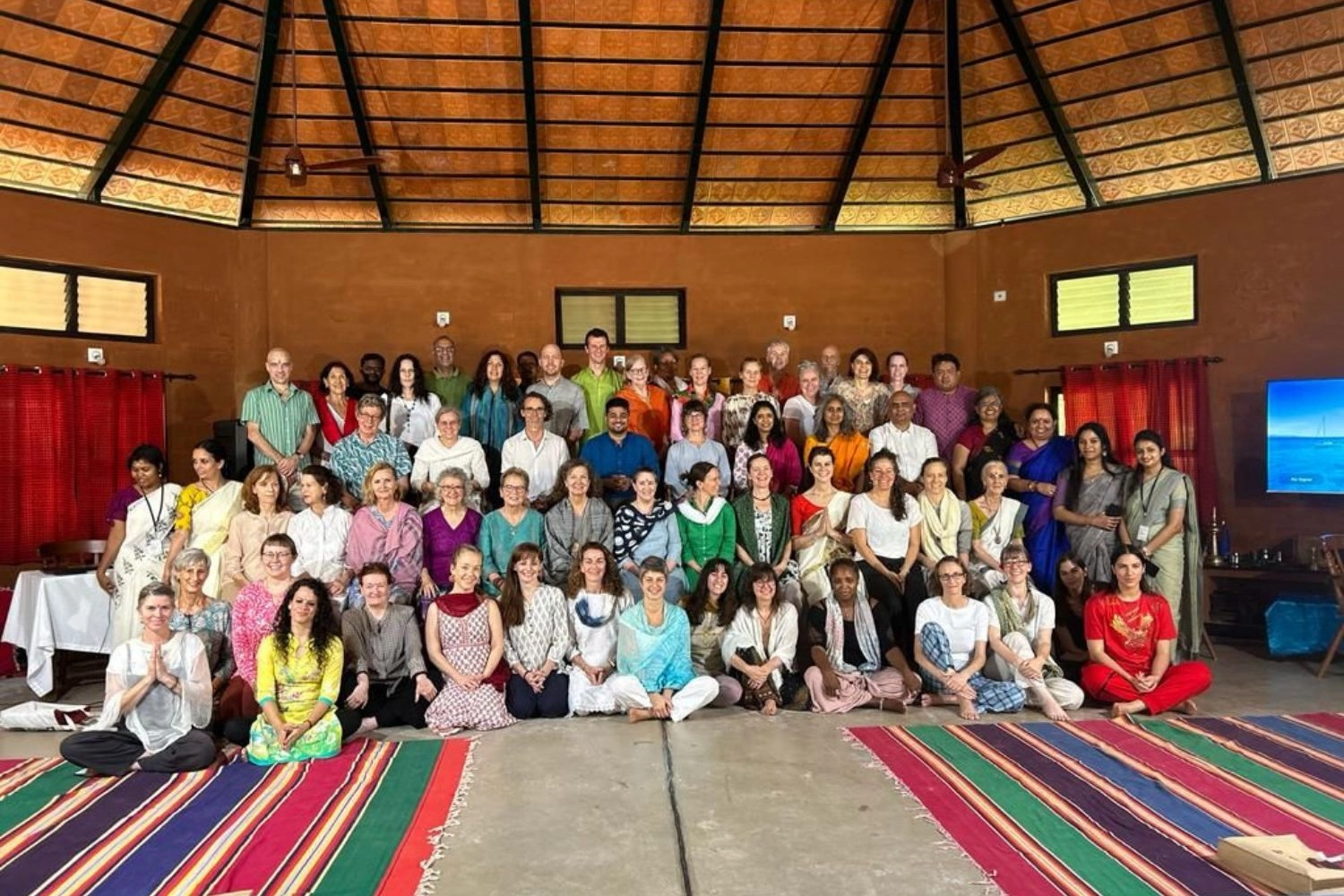
- The session marked three years since the inception of Vedic Threads, prompting a reflection on its evolving purpose and essence.
- Claudia ji emphasized the importance of preserving wisdom traditions through consistent attention and reverence for kala-s and vidyā-s.
- Dr. Gopala Krishnan’s early contribution to Vedic Threads was remembered, honoring how such teachings continue to live on through remembrance.
- The contrast between Western and Eastern learning styles was discussed, referencing a study by Masuda and Nisbett on contextual vs. focal perception.
- The neurological work of Iain McGilchrist highlighted how the right hemisphere of the brain fosters contextual awareness and awe, aligning with Eastern traditions.
- A new format was proposed for 2026: thematic arcs across four sessions with the same teacher, allowing for greater depth and integration.
- Participants shared how the rasa of the sessions—through music, dance, and subtle guidance—has deeply impacted their personal growth and understanding.
- Ayurveda was discussed in the light of context—how hormones and healing can’t be fully understood outside the relational and environmental field.
- Several attendees shared personal transformations through Vedic Threads, including experiences of tapas, trauma recovery, and expanded perception.
- A call was made for increased participant input on topics of interest and for more structured reference material for session preparation.
Learning Objectives:
- Differentiate between contextual (right-brain) and focal (left-brain) approaches to learning and describe their influence on understanding Indian knowledge systems.
- Reflect on the role of rasa and context in preserving and transmitting traditional wisdom, especially in disciplines like Ayurveda.
- Evaluate how shifting to a deeper, integrative structure in learning (such as four-session arcs) can foster meaningful engagement and sustained transformation.
About Vedic Threads
Every Indian wisdom tradition carries within it a vast web of ideas, stories, and living knowledge. Vedic Threads is an invitation to explore that web — one theme at a time, in the company of lifelong practitioners and sincere seekers from around the world. Join hosts Drs. Ramkumar and Claudia Welch and Navneet Raman, and our distinguished guest instructors, for conversations that deepen your understanding of Ayurveda, yoga, and the traditions they emerge from.