Vedic Threads | Self paced
KĀLA: The Power, Perception, and Politics of Time
This course explores Vedic perspectives on time (kāla), highlighting it as a living, relational reality rather than linear clock-time. Ajay Chaturvedi explains how rituals use precise temporal frameworks (pāñcāṅga) to align intention and outcome, and how “mythology” encodes sophisticated knowledge of time, energy, and perception. Time is shown as fluid, shaped by breath, awareness, and māyā. The reflection session emphasizes patience, experiential learning, and the layered nature of happiness, from fleeting joy to deep spiritual bliss. Together, the sessions encourage integrating awareness of time, breath, and inner states into daily life, fostering deeper understanding, receptivity, and alignment with both practice and reality.

Guest Instructor
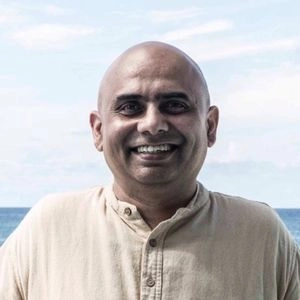
Ajay Chaturvedi
Prof. Ajay Chaturvedi is a distinguished thought leader bridging Vedic philosophy with modern strategy, economics, and systems design. A former Wall Street investment banker, he transitioned to develop the “Kullhad Economy,” a Dharmic model focused on regenerative production, local value creation, and sustainable prosperity. As a professor at IIT Mandi and IIM Rohtak, he integrates cosmology, consciousness, and governance into contemporary frameworks. His acclaimed works, including Time: The Trilogy of Time and Lost Wisdom of the Swastika, explore cosmic time, Yuga cycles, and civilisational balance. Educated at BITS Pilani, Wharton, Harvard, Oxford, and NUS, he brings a globally informed yet deeply rooted perspective.
KĀLA: The Power, Perception, and Politics of Time with Ajay Chaturvedi
Topics Covered:
- What many of us have been calling “mythology” is, in Ajay’s words, often a sign that we have not yet understood the text, and dismissing it as myth is more about our own ignorance than about the purāṇa themselves.
- The saṅkalpa at the start of an anūṣṭhāna lists our gotra, nakṣatra, rāśi and the full time co-ordinates from kalpa down to that day’s tithi and yoga, which directs the fruit of the practice with great precision.
- He reminded us that a linear idea of time is quite recent, becoming strong only after the invention of mechanical clocks, while the pāñcāṅga tradition has been preserved in gurukula-s for a very long time and is still actively used.
- Tithi was presented as central to deva saṃskṛti, shaping how relationships manifest and why festivals such as Mahāśivarātri fall on precise lunar days, with amāvasyā generally avoided for auspicious acts and pūrṇimā seen as bright and exalted.
- Vāra (weekday) was explained through a simple comparison of maths and physics textbooks: it may not be named in the veda text itself, but it is the applied field, carrying agni or jala qualities that define how a tithi behaves, and why, for example, certain fasts like ekādaśī pacify maṅgala (Mars).
- Nakṣatra was described as linked with vāyu, longevity and illness, which is why practices like rudrābhiṣeka are often done the day before, on, and after one’s birth nakṣatra, and why tithi praveśa (when birth tithi and nakṣatra repeat) is such a charged moment each year.
- Yoga was defined as the sum of solar and lunar longitudes; Ajay gave the example of Śrī Harivaṃśa and of Karna in Mahābhārata to show how being born under particular yoga and karaṇa gives strength or limitation that is mostly beyond conscious control.
- The story of the priest who lives 45–50 years in another life between two dips in the river was used to show the nature of māyā as a distortion of time, and how deva-s like Śiva and Viṣṇu move inside that māyā with different strengths.
- A live experiment where participants tried to feel one minute with eyes closed showed that our inner clocks differ, and Ajay linked this to breath rate, the senses and why practices like prāṇāyāma and attention to breath are gateways into a truer “here and now.”
- Towards the end, he framed his work as a new school of thought that has not been explored for about 600 years, arguing that reading purāṇa-s through the lens of time could change how we think about innovation, artificial intelligence and how we place ourselves in the world.
Learning Objectives:
- Describe in 2–3 clear sentences how the five limbs of the pāñcāṅga (tithi, vāra, nakṣatra, yoga, karaṇa) link purāṇic stories to specific aspects of time and why this matters for daily life.
- Identify at least two elements of time they can actively work with (for example, tithi and nakṣatra), and match each one with one simple practice from the session that aligns with that energy (such as a fast, japa or offering).
- Explain, using one everyday example, how changes in breath affect their perception of one minute, and relate this to the idea of living in the “here and now” rather than only in clock-time.
Session 2
Reflections & Integration with the Instructors
Topics Covered:
- Reflection on Overload: Many participants experienced the past sessions as overwhelming due to the rapid pace and density of information.
- Different Reactions to Rasa: Some felt the rasa was strong despite the pace, while others felt their hearts closed off due to the overload.
- The Call for Silence: Participants expressed a desire for more silence and digestion time rather than continuous intellectual transmission.
- Stages of Learning: Ram Kumarji reminded the group that sometimes information takes years to settle, surfacing when it’s needed.
- Different Levels of Happiness: Sanskrit terms for happiness—from harṣa to ānanda—were discussed as layers of evolving awareness and contentment.
- Let it Wash Over You: Claudia emphasized the value of allowing complex teachings to wash over rather than forcing understanding. And being open to each vidya expressing themselves through each vehicle in different ways.
- Time and Patience: Time was explored not only as a topic but also as a teaching method—through fast-paced delivery that required patience.
- Kabir’s Creation Story: Claudia shared a story of creation where kāla (time) is born out of impatience, highlighting the power of choosing patience. And she reflected on the relationship of impatience with greed for things to be different than they are.
- The Role of Ego: Resistance to the teaching style was identified as possibly coming from the ego or attachment to a certain kind of delivery.
- The Vidyās Have a Will: Claudia reflected on how sacred knowledge systems may have their own agency and timing, independent of personal preferences.
Learning Objectives:
- Define and Differentiate: Participants will be able to define at least five Sanskrit terms for happiness and distinguish their meanings in context.
- Reflect and Apply: Participants will explore their own responses to dense or overwhelming learning experiences and identify practices to foster receptivity and patience.
- Integrate Conceptual and Experiential Understanding: Participants will connect the philosophical concept of kāla (time) with personal experiences of learning, recognizing the interplay between knowledge, receptivity, and rasa.
About Vedic Threads
Every Indian wisdom tradition carries within it a vast web of ideas, stories, and living knowledge. Vedic Threads is an invitation to explore that web — one theme at a time, in the company of lifelong practitioners and sincere seekers from around the world. Join hosts Drs. Ramkumar and Claudia Welch and Navneet Raman, and our distinguished guest instructors, for conversations that deepen your understanding of Ayurveda, yoga, and the traditions they emerge from.