September – October
Nyāya: The Path of Clear Knowledge
Perception, Reasoning, Debate, and Liberation
Have you ever been completely certain about something, and later found out you were wrong? Nyāya is the Indian tradition that takes that question seriously. It’s one of the six classical darśanas, ways of seeing and inquiring into reality, and it spends its full attention on how we come to know anything at all: how perception works, how a conclusion becomes valid, and how we tell real understanding apart from assumption.
Over four sessions, Dr. Rammanohar Puthiyedath walks us through this tradition from its foundations to its ultimate aim: not just clearer thinking, but freedom from the suffering that comes from confused thinking.
Attend live or watch the recordings
(valid for 90 days)
Course Fee: USD 100
Get USD 25 off with our community discount
Use coupon code COMMUNITY25 at the time of registration.
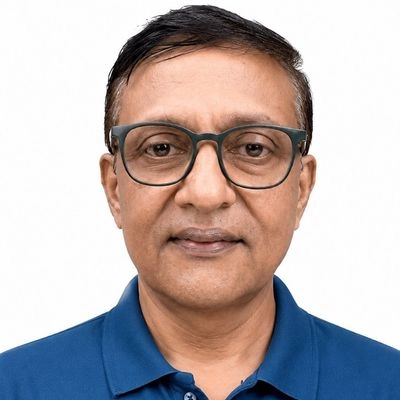
Guest Instructor
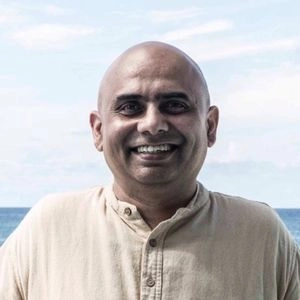
Dr. Rammanohar Puthiyedath
Professor and Research Director
Amrita School of Ayurveda
Dr. Rammanohar Puthiyedath is an Ayurveda physician, researcher, and scholar with extensive experience in the study and teaching of Indian Knowledge Systems.
His work brings together classical Ayurvedic knowledge, Indian philosophical traditions, and contemporary academic research. Over several decades, he has been involved in research, education, clinical practice, and initiatives concerned with the preservation and meaningful transmission of traditional knowledge.
Through his teaching, he explores Indian philosophical systems in their wider intellectual and practical context, making classical ideas accessible while retaining their depth and original framework.
Who is this for?
This series is suitable for anyone interested in Yoga, Āyurveda, Indian Knowledge Systems, philosophy, or simply understanding how the mind forms conclusions, makes errors and arrives at valid knowledge.
No prior study of Nyāya or Indian philosophy is required.
Session 1
From Ṣaḍdarśana to Nyāya Darśana:
An Overview of Indian Philosophical Systems
10th September 2026 | 10am ET / 7.30pm IST
How do the different systems of Indian philosophy understand reality, knowledge, the self and liberation? This opening session offers an accessible introduction to the six classical darśanas, before exploring where Nyāya sits within this wider tradition.
Participants will be introduced to Gautama, the Nyāya Sūtra, and the 16 padārthas that form the framework through which Nyāya examines knowledge, reasoning and the path to freedom.
Topics covered
- Meaning and scope of darśana
- The six Āstika darśanas: Sāṅkhya, Yoga, Nyāya, Vaiśeṣika, Mīmāṃsā and Vedānta
- Shared questions around reality, knowledge, self, bondage and liberation
- The distinctive approaches of the six systems
- The place of Nyāya within the Indian philosophical tradition
- Gautama and the Nyāya Sūtra
- Introduction to the 16 padārthas of Nyāya
Vedic Threads is Satsangam’s signature offering, created to explore the interconnected context of Indian wisdom traditions.
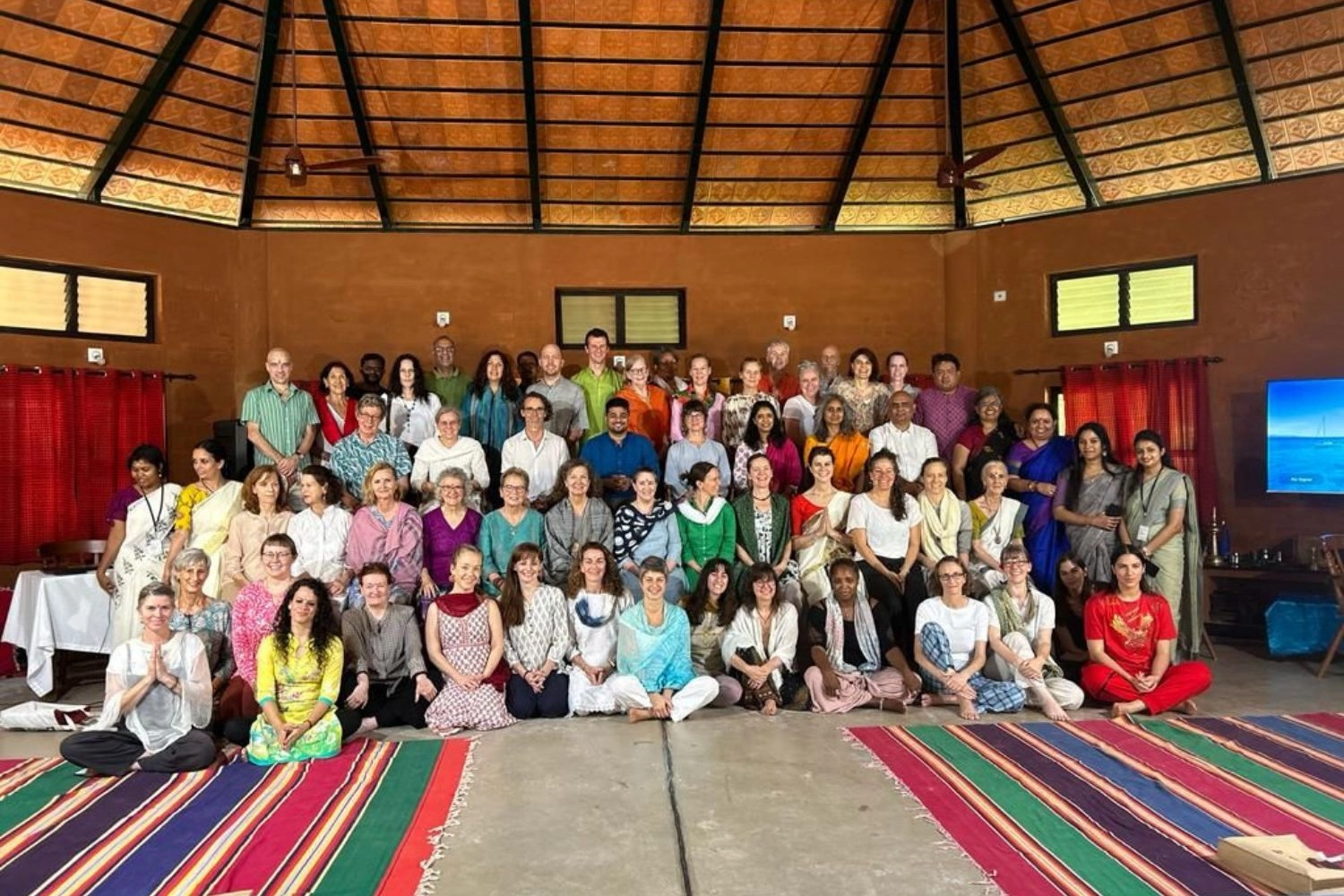
Join Drs. Ramkumar and Claudia Welch, Navneet Raman, invited instructors, and participants from around the world for thoughtful, engaging conversations.
Attend live or watch the recordings
Valid for 90 days
Course fee: USD 100
Get USD 25 off with our community discount
Use coupon code COMMUNITY25 at the time of registration.
Session 2
Nyāya Epistemology:
Pramāṇa and Valid Knowledge
24th September 2026 | 10am ET / 7.30pm IST
How do we know that something is true? Nyāya approaches this question through a careful study of the means by which valid knowledge arises.
This session introduces the four pramāṇas recognised by Nyāya: perception, inference, comparison and reliable testimony. It also looks at how valid knowledge differs from doubt, error and mistaken understanding.
Topics covered
- Pramā, pramāṇa and valid cognition
- The four Nyāya pramāṇas: Pratyakṣa, Anumāna, Upamāna and Śabda
- How perception, or pratyakṣa, gives rise to knowledge
- Anumāna and the importance of vyāpti
- Knowledge through comparison (upamāna) and reliable testimony (śabda)
- Valid knowledge, doubt and error
- The role of pramāṇa in arriving at true knowledge
Session 3
Nyāya Logic and Dialectics:
Anumāna, Tarka and Hetvābhāsa
8th October 2026 | 10am ET / 7.30pm IST
How do we move from an observation to a sound conclusion? And how do we recognise when an argument only appears convincing?
This session explores the sophisticated approach to inference and reasoning developed within Nyāya. Participants will examine how an argument is constructed, how assumptions are tested, how faulty reasoning is recognised, and how different forms of debate can either clarify or obscure the truth.
Topics covered
- The structure and purpose of inference (anumāna)
- Pakṣa, sādhya, hetu and vyāpti: the elements of a valid inference
- The five-membered Nyāya syllogism
- Tarka and its role in testing reasoning
- Hetvābhāsa: recognising major forms of faulty reasoning
- Vāda, jalpa and vitaṇḍā: different approaches to debate
- Chala, jāti and nigrahasthāna: errors, objections and points of defeat in debate
- Applying Nyāya reasoning to contemporary critical thinking
Session 4
Nyāya:
Reality, Self and Liberation
22nd October 2026 | 10am ET / 7.30pm IST
For Nyāya, the search for valid knowledge ultimately leads to deeper questions: Who is the knower? What is the relationship between body, mind and self? Why do we suffer, and can knowledge help bring that suffering to an end?
In this concluding session, the inquiry moves from knowledge and reasoning to Ātman, the nature of reality, Īśvara, karma and liberation. It brings the four-part journey together by showing why clear knowledge matters within the larger aim of freedom from suffering.
Topics covered
- The 12 prameyas, or objects of valid knowledge
- The Nyāya understanding of Ātman (self)
- Body, senses, mind and cognition
- Nyāya realism and the existence of an external world
- Īśvara and Nyāya arguments for God
- Ignorance, doṣa, karma and duḥkha
- Apavarga: liberation as the ultimate goal
- From valid knowledge to freedom from suffering
About Vedic Threads
Vedic Threads is a space for those who wish to explore the contexts in which Indian wisdom traditions, Āyurveda, Yoga, music, poetry, ritual, and performance truly live.
It is for those who are curious to learn Eastern subjects in an Eastern way, to learn directly from lifelong students and practitioners, and to explore how ideas such as prāṇa, mantra, kalā, and bhāva can be understood and brought into daily life.
It is also a space for those who value being part of a thoughtful and engaged community exploring Vedic wisdom together.