July – August
Vaiśeṣika: Ancient India’s Map of Reality
Matter, Mind, Perception, and Freedom
Vaiśeṣika is one of the six classical darśanas of India. It asks questions that underlie all inquiry: What is the world made of? How do we know what we know? Why is everything unique? What is the relationship between matter, mind, self, and liberation?
This series enters Vaiśeṣika as a method of seeing clearly. Through its categories of existence, its atomic theory, and its inquiry into perception and selfhood, it trains the observer — refining how we look at the world and at ourselves.
For anyone drawn to Yoga, Ayurveda, Indian Knowledge Systems, or the deep questions of consciousness and healing, Vaiśeṣika offers something rare: a rigorous, systematic, and liberating account of reality — from the smallest particle to the nature of the Self.
Guest Instructor
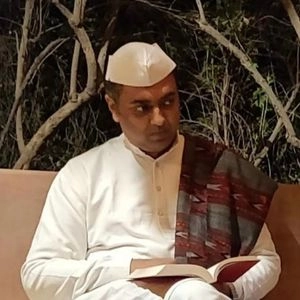
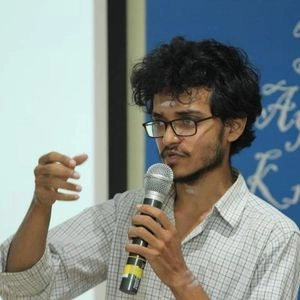
Dr. Rishi Manivannan
Dr. Rishi Manivannan comes from a traditional Idiga vishavaidya lineage and has trained in Ayurveda, Chinese medicine, Siddha, Tantra, and other traditional knowledge systems.
He studied under Siddha Yogi K.P. Arjunan in the Sri Atri Maharshi Siddha lineage, and was later initiated into Srividya Tantra and the Ashtavaidyan tradition of Ayurveda by Padmashri P.R. Krishnakumar, with whom he worked closely at Arya Vaidya Pharmacy.
He is currently developing Garden of Peace, an Ayurveda village dedicated to Gurukula education, organic farming, herbal medicine, sustainable food, and traditional knowledge. He also serves as Editorial Assistant for Science of Life journal and is involved in translational research on Ayurveda and Siddha with scientists from AYUSH, AIIMS, and Cambridge.
Session 1
Seeing the world as it is
The art of clear perception
2nd July 2026 | 10am EST / 8.30 pm IST
Vaiśeṣika begins with the question: what does it mean to see reality clearly? This opening session introduces Vaiśeṣika as one of India’s classical darśanas, a way of seeing that invites us to observe the world with precision, clarity, and discernment.
Vaiśeṣika helps us examine how something is known. Participants will be introduced to the idea of padārtha: that which can be known, named, and examined.
This session sets the foundation for the series by exploring clear perception as a path of inquiry. It invites participants to reflect on the difference between observation and projection, and to discover how careful seeing can become a contemplative and spiritual practice.
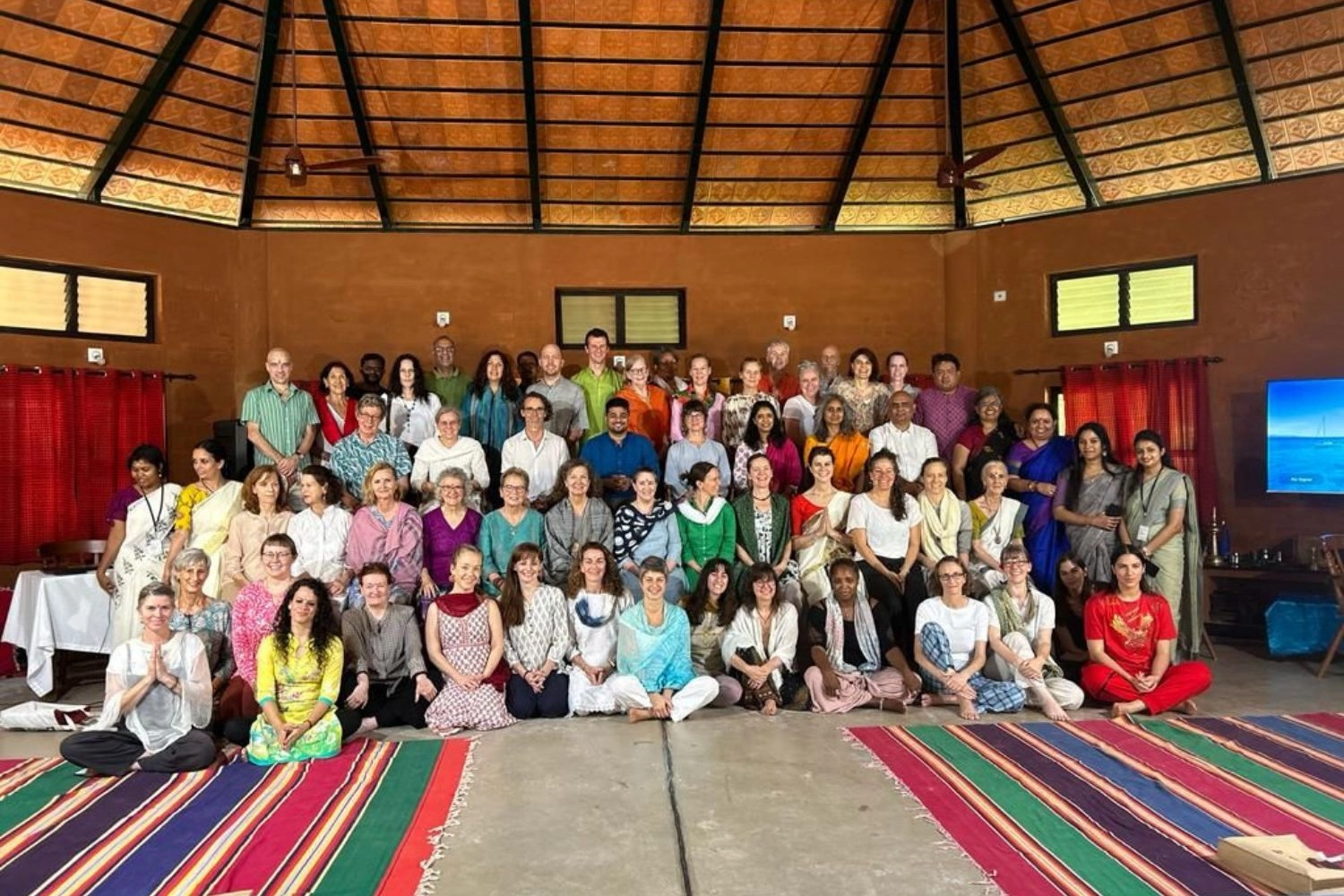
Vedic Threads is Satsangam’s signature offering, designed to immerse students in the interconnected context of Indian wisdom traditions.
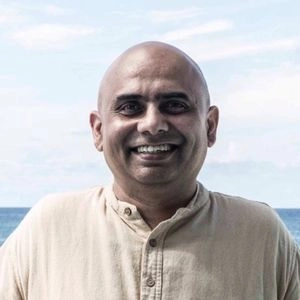
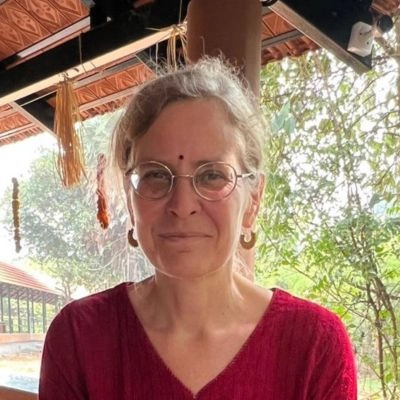
Join hosts Drs. Ramkumar and Claudia Welch, Navneet Raman, world-class instructors, and sincere, curious participants from all over the world for intimate, enlightening conversations around these sorts of topics in this twice-monthly, live, online Vedic Threads membership.
Session 2
What is the world made of?
Substance, qualities, and change
16th July 2026 | 10am EST / 7.30 pm IST
This session explores how Vaiśeṣika understands the world of things, qualities, and change. Everything we encounter appears as something, carries qualities, and undergoes transformation. A flower has colour and fragrance. Food has taste, heaviness, heat, or lightness. The body ages. The mind moves. The world is never static.
Through these everyday examples, participants will be introduced to Vaiśeṣika’s inquiry into dravya (substance), guṇa (qualities), and karma (action). We will consider a clear and accessible way to understand how we recognize objects, how qualities shape perception, and how change reveals the nature of life.
The discussion may also open into the elemental view of the body and nature, creating a bridge between philosophy, healing traditions, and lived experience. Participants will be invited to look at the material world as a doorway into deeper understanding.
Session 3
Why is each thing unique?
Similarity, difference, and connection
6th August 2026 | 10am EST / 7.30 pm IST
How do we recognize that many different trees are all “trees,” while still seeing that no two trees are the same? How do we understand the difference between shared identity and individual expression? This session explores Vaiśeṣika’s refined inquiry into similarity, difference, and relationship.
Participants will examine how the mind recognizes patterns, forms categories, and distinguishes one thing from another. The session introduces the deeper questions behind sāmānya, viśeṣa, and samavāya: shared identity, uniqueness, and inseparable connection.
This session is especially relevant to the way we understand people, relationships, language, constitution, and personal nature. It invites participants to consider whether difference must lead to separation, or whether uniqueness can be understood within a wider field of connection and shared reality.
Session 4
From atoms to the self
Matter, mind, and liberation
20th August 2026 | 10am EST / 7.30 pm IST
The concluding session brings together Vaiśeṣika’s understanding of matter, mind, self, knowledge, and freedom. It begins with the ancient Indian reflection on paramāṇu–the atom, and the material world, then moves toward deeper questions of consciousness, cognition, absence, and liberation.
Participants will explore the relationship between the material world and the knowing self. What is the difference between manas–the mind that thinks, remembers, and perceives, and ātman–the self that knows? How do we understand what is present, what is absent, and what is no longer there? This inquiry may also introduce abhāva, the category of absence or non-existence.
This session invites participants to see Vaiśeṣika as a path toward clarity. By understanding matter, perception, mind, and self more precisely, the series concludes with a reflection on how clear knowledge can become a movement toward inner freedom.
About Vedic Threads
Vedic Threads is a space for those who wish to explore the contexts in which Indian wisdom traditions, Ayurveda, yoga, music, poetry, ritual, and performance, truly live.
- It is for those who are curious to learn Eastern subjects in an Eastern way.
- For those who wish to learn directly from lifelong students and practitioners.
- For those seeking practical ways to bring concepts like prāṇa, mantra, kalā, and bhāva into daily life.
- For those who value being part of a thoughtful and engaged community exploring Vedic wisdom together.