Vedic Threads | Self paced
Rasa to Ānanda
A Satsaṅga on the Journey from Head to Heart
This session explores the journey from rasa (emotional essence) to ānanda (deep bliss), emphasizing that true joy arises through direct experience rather than intellectual understanding. Navneet Raman uses music, poetry, and reflection to show how surrender, devotion, and vulnerability allow rasa to mature into inner fulfillment. The reflection session expands this through art and sensory awareness, encouraging a shift from analysis to openness and childlike perception. Together, the sessions highlight that ānanda is not something to achieve but to uncover—through presence, feeling, and connection—inviting a more heartfelt, experiential approach to daily living and spiritual practice.
Guest Instructor
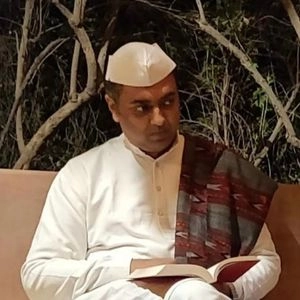
Navneet Raman
Navneet Raman is a cultural preservationist and arts patron from a historic Varanasi family deeply rooted in India’s educational and cultural legacy. For over two decades, he has worked to sustain and evolve the city’s heritage through initiatives in art, education, and conservation. He is the founder of Kriti Gallery and Artist Residency, co-founder of the Banaras Cultural Foundation, and Creative Director of the Banaras Museum of Contemporary Art. His work bridges traditional crafts and contemporary art, supporting global exhibitions and artisans. Through educational programs and cultural collaborations, he continues to foster interdisciplinary learning and preserve Varanasi’s living heritage.
Rasa to Ānanda
A Satsaṅga on the Journey from Head to Heart with Navneet Raman
Topics Covered:
- Kumar Gandharva’s “Guruji Jahān Baiṭhūn” set the emotional foundation of śaraṇāgati (surrender) and trust in the presence of the guru.
- Rasa was described as an emotional taste, while ānanda was framed as the state that arises when we fully receive that taste without resistance.
- The metaphor of the pot (kalasha) leaving the house spoke to vulnerability and the courage to let life churn us.
- The Kabir bhajan “Moko Kahān Dhoondhe Re Bande” reminded us not to search for the divine outside, but to recognize it in faith and nearness.
- Navneet ji emphasized that ānanda cannot be intellectually constructed – it must be experienced through anubhūti.
- Claudia ji’s story of Kabir and the clay pots illustrated how joy is not in the ritual but in the bhāva (feeling) behind the action.
- Ramkumar ji introduced the alignment of emotional states with the pañca kośa, mapping the journey inward.
- Claudia ji brought in Ian McGilchrist’s model of right- and left-brain learning, pointing to the importance of art and wholeness in perception.
- Tanya and Shilpa shared reflections on grief, creativity, and healing, showing that ānanda can arrive even in difficult transitions.
- Muhammad Tufail Niazi’s piece “Main To Jhuk Raiyan Charan Pakad Ke” concluded the session with a lived expression of surrender to joy.
Learning Objectives:
- Define the distinction between rasa and ānanda, and understand how full immersion in rasa opens the door to ānanda.
- Explain the role of anubhūti (direct experience) in the realization of bliss, as opposed to conceptual or intellectual knowledge.
- Identify practices such as music, nature, poetry, and stillness that can move emotional experience toward the spiritual state of ānanda.
Session 2
Reflections & Integration with the Instructors
Topics Covered:
- Navneet ji introduced a bhajan on prabal prema alongside a painting of Krishna and the Gopis, illustrating the emotional flow beyond intellect.
- The Gopis’ varied responses to Krishna’s stealing their clothes and being present while they were unclothed—curiosity, denial, shyness—symbolized diverse emotional reactions and openness.
- The presence of water and lotuses in the painting signified emotional flow, purity, and spiritual unfolding.
- The pairing of music and visual art deepened the group’s emotional experience, showing how multisensory input enhances bhava.
- Ramkumarji distinguished viṣayānanda (sensory bliss) from ātmānanda (Self-bliss), placing the session’s depth in the latter realm.
- The group discussed trusting perception without rushing to label, allowing deeper awareness to emerge naturally.
- Shilpaji emphasized the value of childlike wonder in letting impressions move the heart freely.
- Stories about Gurus illustrated how emotional safety and relational trust open the heart to learning and transformation.
- Sunilji reflected on naming and recognizing phenomena like nāma-rūpa to develop clarity and spiritual insight.
- The session encouraged participants to resist premature conceptualization and remain open to subtle inner shifts.
Learning Objectives:
- Recognize how combining music, visual art, and storytelling can help shift emotional awareness from the mind to the heart.
- Understand the difference between viṣayāananda (bliss from the senses) and ātmānanda (bliss of the Self), and identify personal experiences of each.
- Practice staying open to sensory impressions with a childlike attitude, and reflect on how this openness affects one’s inner state.
About Vedic Threads
Every Indian wisdom tradition carries within it a vast web of ideas, stories, and living knowledge. Vedic Threads is an invitation to explore that web — one theme at a time, in the company of lifelong practitioners and sincere seekers from around the world. Join hosts Drs. Ramkumar and Claudia Welch and Navneet Raman, and our distinguished guest instructors, for conversations that deepen your understanding of Ayurveda, yoga, and the traditions they emerge from.