Vedic Threads | Self paced
Sattvāvajaya
Healing Trauma with Yoga and Ayurveda
This session explores sattvāvajaya cikitsā as a yogic and Ayurvedic approach to healing trauma and restoring mental balance. Arun Deva explains that true healing comes from regaining control of the mind by restraining unwholesome tendencies and cultivating positive patterns through practices like pratipakṣa-bhāvanā. Integrating yoga tools—from ethical disciplines to meditation—with Ayurvedic understanding of mind-body imbalances, the session highlights breath, awareness, and self-regulation as key therapies. The reflection session deepens this by examining knowledge, restraint, memory, and concentration as core methods for mental clarity, emphasizing that healing is a holistic process involving discipline, awareness, and spiritual integration.
Guest Instructor
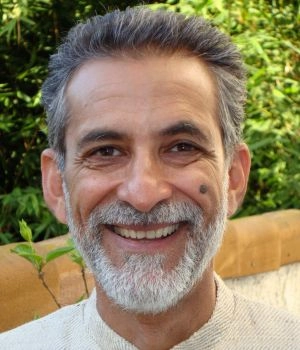
Arun Deva
Arun Deva is a highly respected Ayurvedic practitioner and Yoga therapist with decades of experience in integrating traditional healing systems. A NAMA-certified practitioner and former IAYT-certified Yoga therapist, he has served in leadership roles within major Ayurvedic associations and contributed extensively through teaching, writing, and international lectures. Trained in India and based in Los Angeles, he blends Ayurveda, Yoga, and therapeutic practice in a holistic approach to well-being. He has led global retreats and continues to teach selectively, focusing on deeper inquiry, healing, and spiritual growth, often alongside his daughter, Anjali Deva.
Sattvāvajaya
Healing Trauma with Yoga and Ayurveda with Arun Deva
Topics Covered:
- Āyurvedic Yoga therapy focuses on the individual—understanding their prakṛti (nature), vikṛti (imbalance), and applying personalized healing practices.
- Therapists design and guide Yoga-based healing programs using a combination of instruction, demonstration, and lifestyle alignment.
- Psychosomatic disturbances arise from impaired intellect, will, memory, and unhealthy sensory interactions.
- True healing involves restoring balance, with sattva (mental clarity and harmony) as the key to emotional stability.
- Sāttvavajaya cikitsā helps regain control of the mind by restraining negative tendencies and cultivating positive habits (pratipakṣa-bhāvanā).
- Yoga practices are divided into 5 external (yama, niyama, āsana, prāṇāyāma, pratyāhāra) and 3 internal (dhāraṇā, dhyāna, samādhi) tools for mental evolution.
- Trauma impacts mental health through fight-or-flight responses; recovery requires awareness, emotional connection, and mindfulness (mindsight).
- Viṣāda is interpreted as generalized anxiety rather than depression, linking classical texts to modern psychological understanding.
- Healing tools include cleansing, detoxification, routine alignment, conscious choices, movement therapy, and self-care practices.
- Personal healing from trauma is essential for helping others, supported by practices like mindfulness, acceptance, emotional intelligence (rasa-bhāva), and satsaṅga.
Learning Objectives:
- Understand the principles of Āyurvedic Yoga therapy and its individualized approach to healing.
- Explore the role of the mind, trauma, and psychosomatic factors in health and imbalance.
- Learn key Yogic and Āyurvedic tools for restoring mental balance and supporting holistic healing.
Session 2
Reflections & Integration with the Instructors
Topics Covered:
- Sattvāvajaya cikitsā is defined as “restraint of the mind from unwholesome objects” in the Caraka Saṁhitā.
- The discussion examined whether sattvāvajaya aligns more with Western psychotherapy or with ritual and external interventions.
- Ayurveda differentiates between agantuka (externally caused) and nija (internally caused) mental imbalances.
- The role of knowledge, specialized knowledge, sensory restraint (indriya nigraha), memory, concentration, and specific knowledge in treating mental disturbances.
- Ayurveda primarily focuses on kāya cikitsā (body-based treatment), leaving mental and spiritual concerns to allied sciences like Yoga, Tantra, and Vedanta.
- Historical context suggests that sattvāvajaya may have involved or included rituals, mantras, and other externally administered techniques rather than self-help.
- Methods of shocking the mind out of a tamasic rut, such as exposure to sudden fear or powerful sensory stimuli, were mentioned as potential sattvāvajaya practices as mentioned in Caraka.
- The interconnectedness of Ayurveda with Jyotiṣa and Mantra Vidyā in diagnosing and treating psychological disturbances.
- The importance of sattva guṇa in maintaining mental stability and resisting insanity (unmāda), as emphasized in classical texts.
- The evolving nature of Ayurvedic thought and its adaptability in integrating knowledge from other disciplines.
Learning Objectives:
- Define sattvāvajaya cikitsā within the context of the threefold Ayurvedic treatment approach and understand its role in mental health.
- Identify the traditional techniques used in sattvāvajaya, including nigraha (restraint), memory, concentration, and knowledge, and compare them to modern therapeutic methods.
- Explore the relationship between sattvāvajaya and allied sciences such as Jyotiṣa, Mantra Vidyā, and Vedantic philosophy in treating mental disturbances.
About Vedic Threads
Every Indian wisdom tradition carries within it a vast web of ideas, stories, and living knowledge. Vedic Threads is an invitation to explore that web — one theme at a time, in the company of lifelong practitioners and sincere seekers from around the world. Join hosts Drs. Ramkumar and Claudia Welch and Navneet Raman, and our distinguished guest instructors, for conversations that deepen your understanding of Ayurveda, yoga, and the traditions they emerge from.